
.svg)
.svg)
.svg)

.svg)
22
December
2025
-
Rémi Le Druillenec
Written for Cosmétiquemag — How can you transpose a couture DNA into a world governed by R&D, product cycles, and selective distribution?
In a world where double-digit growth is no longer the norm, beauty stands out as one of the few luxury sectors that combines desirability, volume, and margins. More than just a segment, it embodies a bridge between luxury and accessibility: a gateway to the world of the great Houses, but also a formidable laboratory for sensory experiences. However, transposing the codes of a leather or couture empire into a world dominated by technical innovation, rapid product launches and selective distribution is a delicate challenge.
It takes more than just a monogram to convince: heritage must be translated into texture, light, and emotion. Summer 2025 marks a decisive step for Louis Vuitton in this regard. After establishing its olfactory vision with a collection of perfumes that has become a benchmark, the world's leading luggage maker is now expanding its universe to beauty with its first makeup line. A symbolic launch, both long-awaited and inevitable, orchestrated alongside the legendary Pat McGrath, a leading figure in contemporary makeup creation. Together, they bring together two areas of expertise: the craftsmanship of the gesture and the precision of the pigment.
But beyond the product itself, a brand equation is emerging in a context where luxury is becoming tiresome. For Louis Vuitton, beauty is not only a growth driver in a group already firmly established in the segment—led by Dior Beauty, Guerlain, and Givenchy—it is becoming a new instrument of orchestrated, ly desirable appeal.
These forays into makeup are part of a controlled expansion strategy for brands in a sector where purchase frequency creates loyalty and where community is built through tutorials and viral launches. But to make their mark in this demanding product category, they need to reinvent themselves: What is their story? What gives them legitimacy? What services do they offer?
The architecture of a well-crafted story
Fashion houses have always told stories: stories of a moment, a gesture, a designer. Beauty appears to be a natural narrative extension—another way of expressing the soul of the brand. But behind this poetic obviousness lies a much more complex reality: that of an industry governed by speed, performance, and constraints.
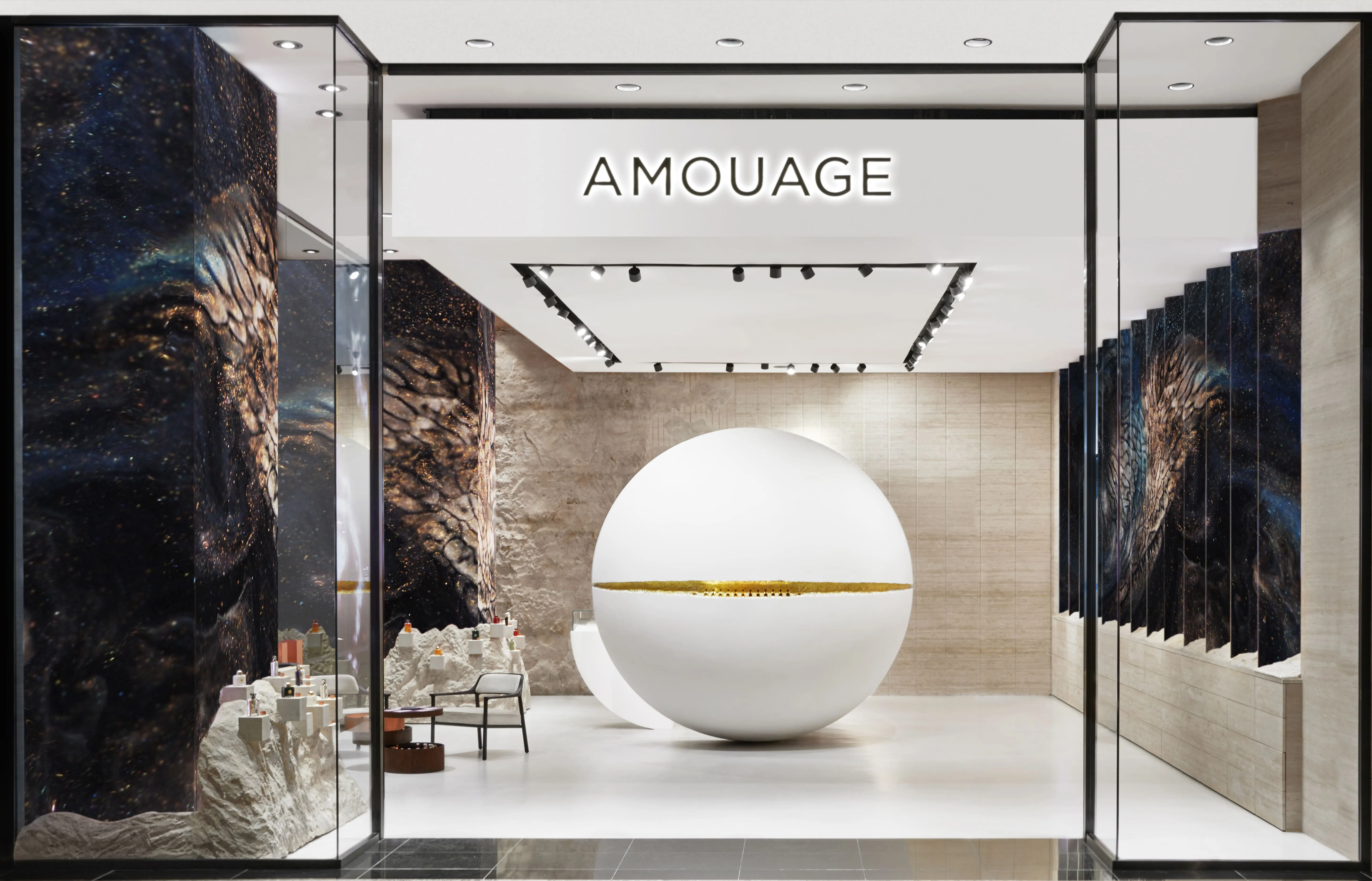
It is in this context that architecture and design become strategic allies. They enable the narrative to be brought to life and anchor the brand in a tangible universe. Maison Dior has understood this perfectly with its Private Collection: Versailles parquet flooring, iconic silhouettes, and flower gardens compose an olfactory scenography where every detail refers to the world of Monsieur Dior. The experience goes beyond sensory discovery: it becomes a cultural immersion.
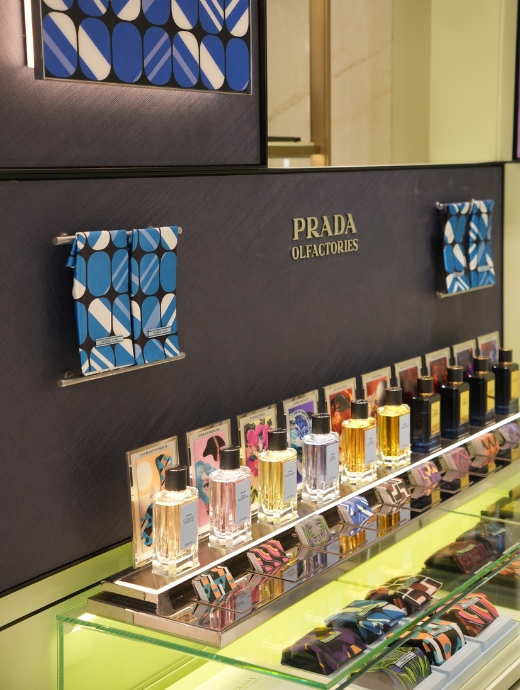
Prada, for its part, has opted for the obvious. Its Prada Olfactories collection, presented in silk pouches from the fashion world, illustrates an approach where narrative and sensory e sintertwine to create visual merchandising that is aesthetic, sensual, and educational.
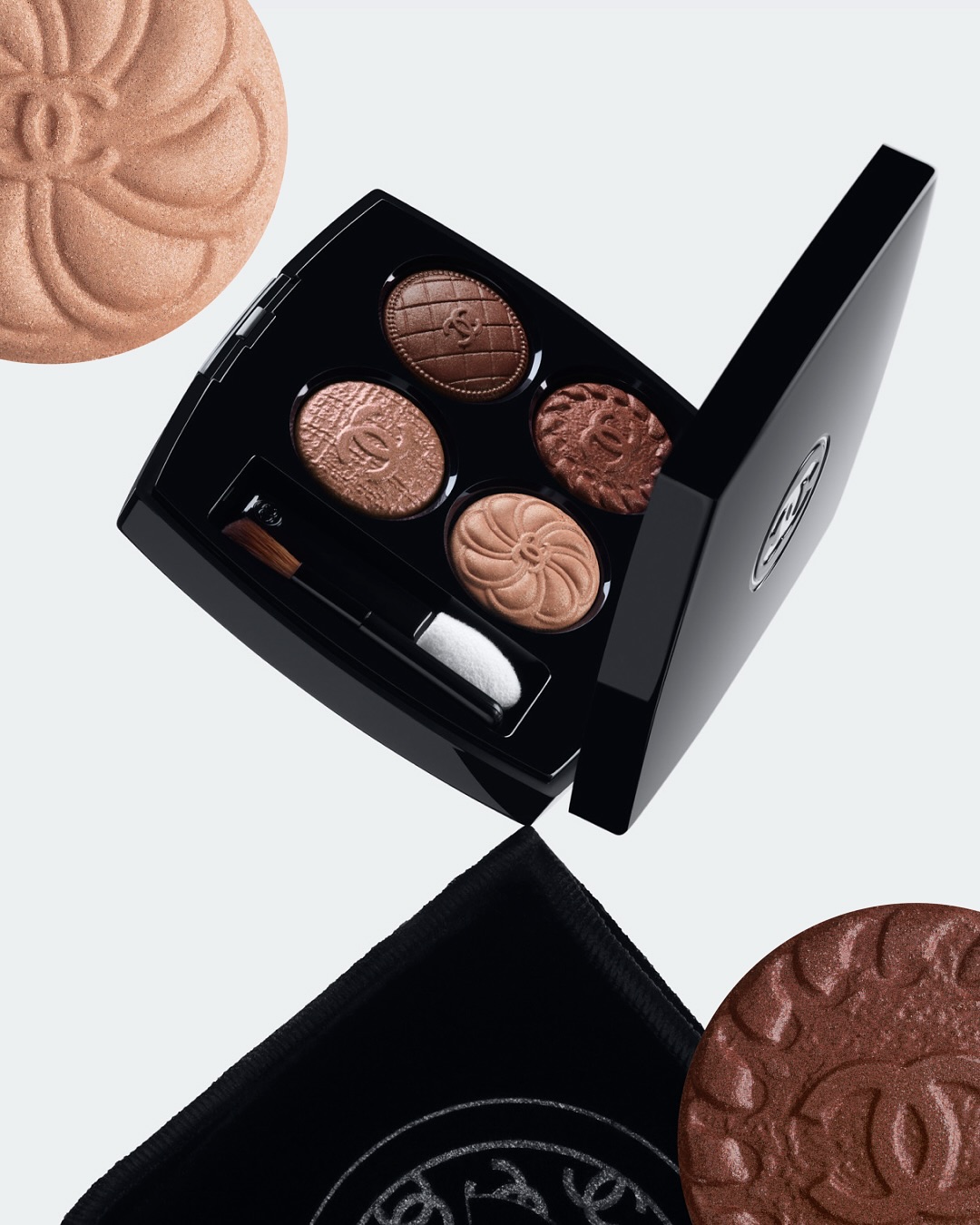
The product itself can also become a narrative medium. Last May, CHANEL unveiled Boutons de Couture, a collection of eye shadows inspired by the iconic buttons on its suits. Four harmonies, sixteen shades, each a nod to the House's heritage. It's a way of creating a dialogue between the precision of makeup application and the rigor of clothing, anchoring beauty in a tradition of craftsmanship without freezing it in time.
But should beauty reflect fashion, or invent its own language in multi-expert luxury houses? In the world of makeup and skincare, a product cannot simply be beautiful: it must also work. Users don't just expect a symbolic gesture—they expect tangible performance: hold, texture, effectiveness, comfort. They evaluate the results, compare, test, and comment. This demand for proof introduces an almost scientific dimension into a world that has historically been narrative and emotional. That's where the complexity lies: how can we reconcile imagination and measurement, promise and proof, magic and matter?
Fashion is a gesture, beauty is a science.
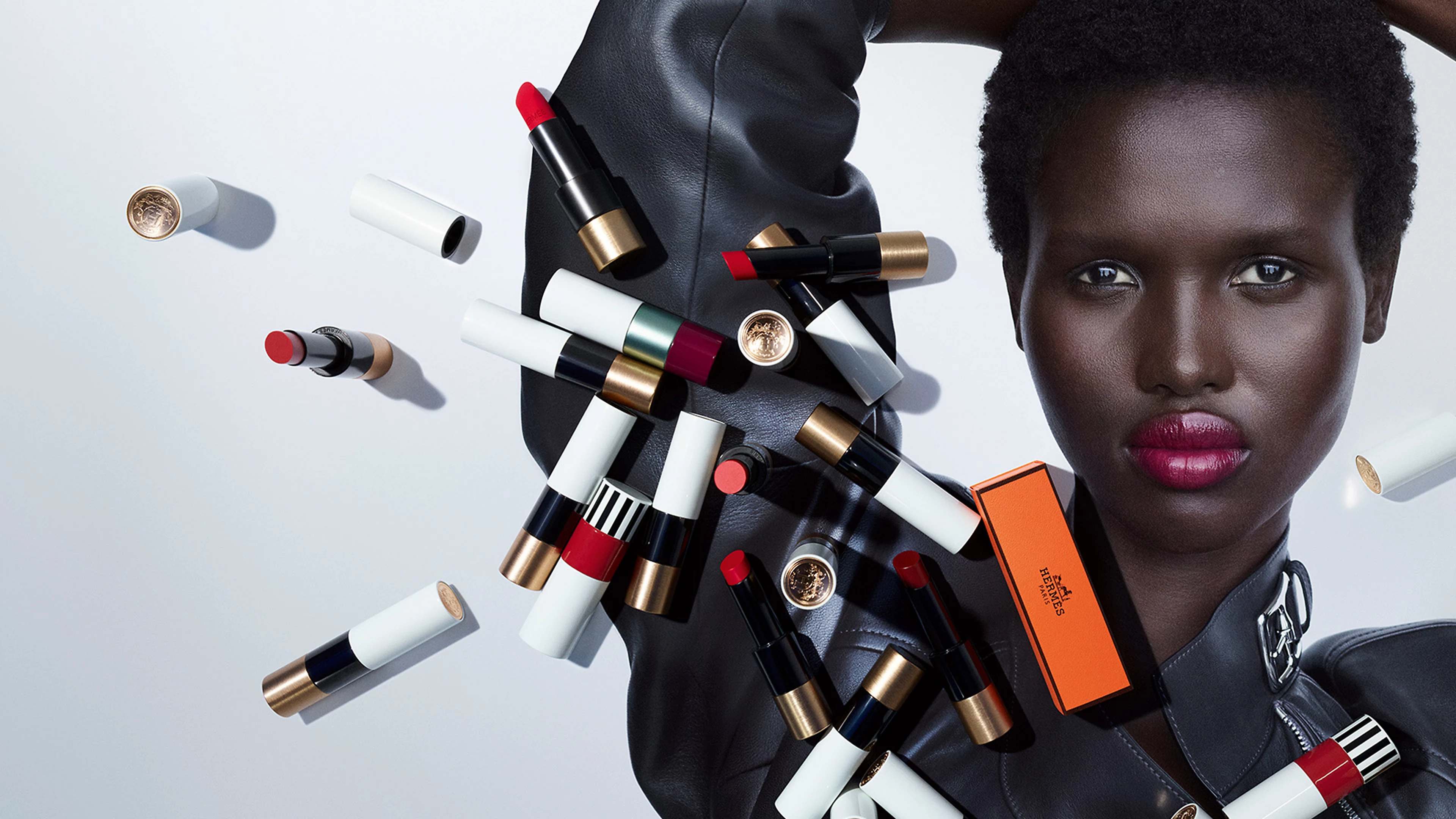
Multi-expert companies navigate between two extremes: staying true to their DNA and meeting ever-higher technical standards. In striking this balance, innovation becomes a new craft—that of the laboratory, formulation, and sensoriality. By internalizing their beauty expertise—dedicated marketing teams, R&D laboratories, specific commercial channels—some brands are transforming industrial constraints into creative leverage. Hermès has made the very texture of its lipsticks a signature feature: a velvety feel and a closing sound as precise as the snap of a Kelly bag. Dior, for its part, showcases scientific research as an extension of its floral couture, transforming the laboratory into a veritable workshop.
Beauty thus becomes an autonomous language, a territory of expression where engineering and gesture come together in the service of storytelling. For a fashion house, inventing this language means accepting that beauty is not simply a translation of fashion, but another form of expression of its essence. However, the narrative must be accompanied by a genuine demonstration of expertise. CHANEL offers a masterful illustration of this. The House devotes entire spaces within its boutiques to beauty, creating veritable shop-in-shops where makeup stations and professional tools are guided by expert advisors. These environments blur the line between fashion and cosmetics: the experience is as controlled and immersive as it is at pure beauty players. And with the recent Maison de Beauté in Paris, CHANEL is taking this logic even further—offering much more than just products: a range of tailor-made services, a place for experiences, and a new form of intimacy between the brand and its customers.
.jpg)
A strategic gateway.
For major fashion houses, beauty allows them to redefine how they orchestrate their retail network and customer relations across all their areas of expertise—fashion, accessories, perfume, and skincare. At CHANEL, a simple " May I spray you with perfume? " asked by an advisor during a ready-to-wear consultation is enough to transform a commercial gesture into an act of service, marked by delicacy and refinement. Perfume ceases to be an end in itself and becomes a sensory link, an added touch of soul in the customer journey. Some boutiques even go so far as to orchestrate a veritable olfactory zoning, where each space is adorned with a creation from the House, weaving a sensory coherence throughout the premises.
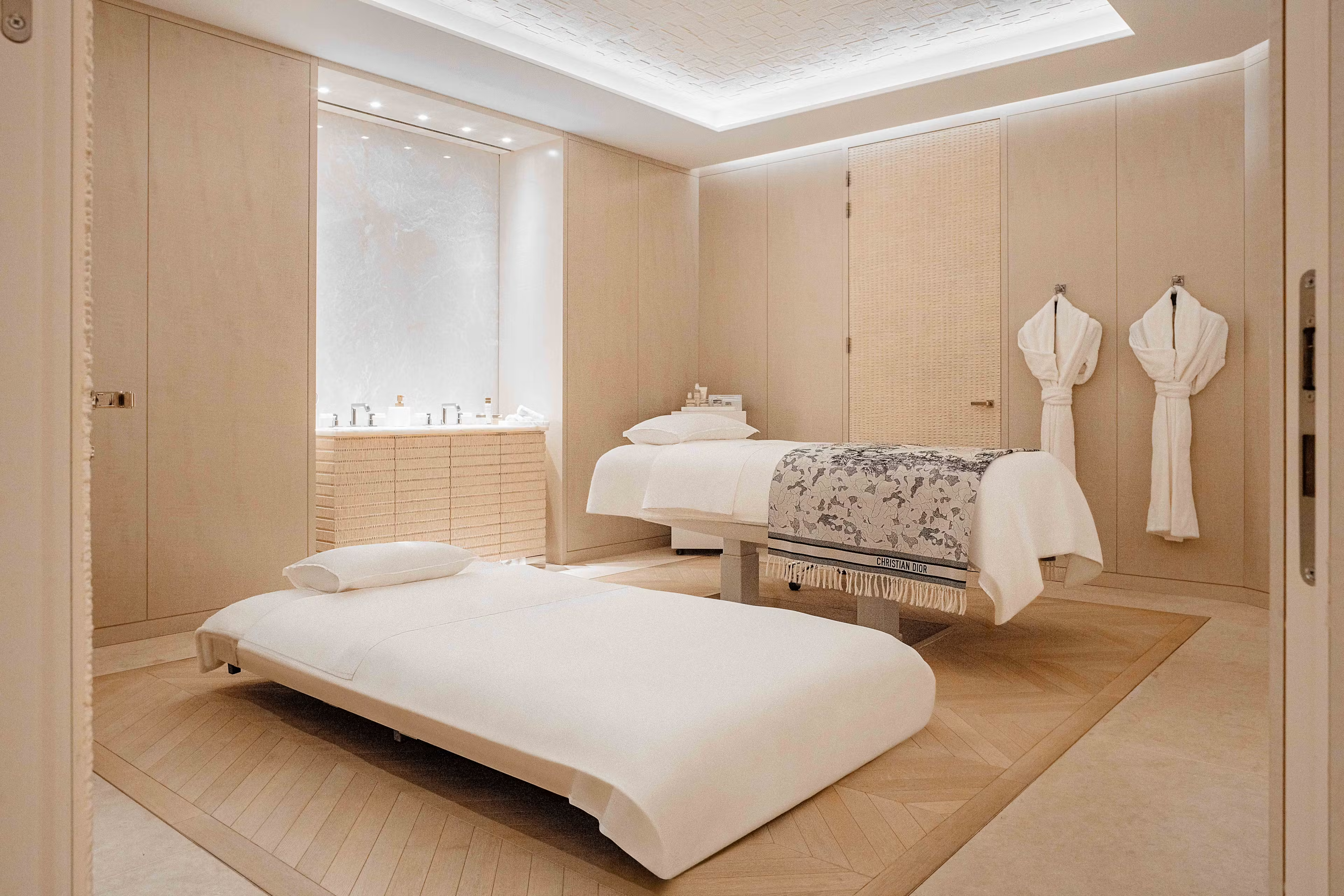
Today, service extends beyond the walls of the store. The partnership between Dior and Cheval Blanc is a perfect illustration of this: six treatment suites, each inspired by a chapter in the House's history, welcome guests in a subtle dialogue between hospitality and high beauty. The New Look Suite, a tribute to the iconic silhouette, embodies this approach: the Rêve Couture ritual, a four-handed treatment, extends the Dior experience beyond the product, in a moment of pure emotion.

A new grammar.
By investing in beauty, fashion houses are not simply expanding their portfolios: they are inventing a new language of luxury, where narrative, expertise, and service intertwine to create a more intimate, more lasting, and therefore more effective relationship. In a world where desirability relies as much on consistency as on uniqueness, beauty becomes a realm of total expression—where material meets gesture, science meets emotion, and product becomes experience.
More than diversification, it is an act of immaterial tailoring: bringing worlds together, harmonizing meanings and uses to extend the brand's promise into the intimacy of everyday life.
Opinion piece written for Cosmétiquemag
Héroïne is the art of designing experiences that leave a lasting impression. Scenography, space design and sensitive storytelling at the service of your world and the people who inhabit it.

%20(1).webp)

.webp)
.svg)

.svg)