
.svg)
.svg)
.svg)

.svg)
09
March
2026
-
Rémi Le Druillenec
Written for Luxus+ - How can luxury brands drive foot traffic to their stores through an effective drive-to-store strategy?
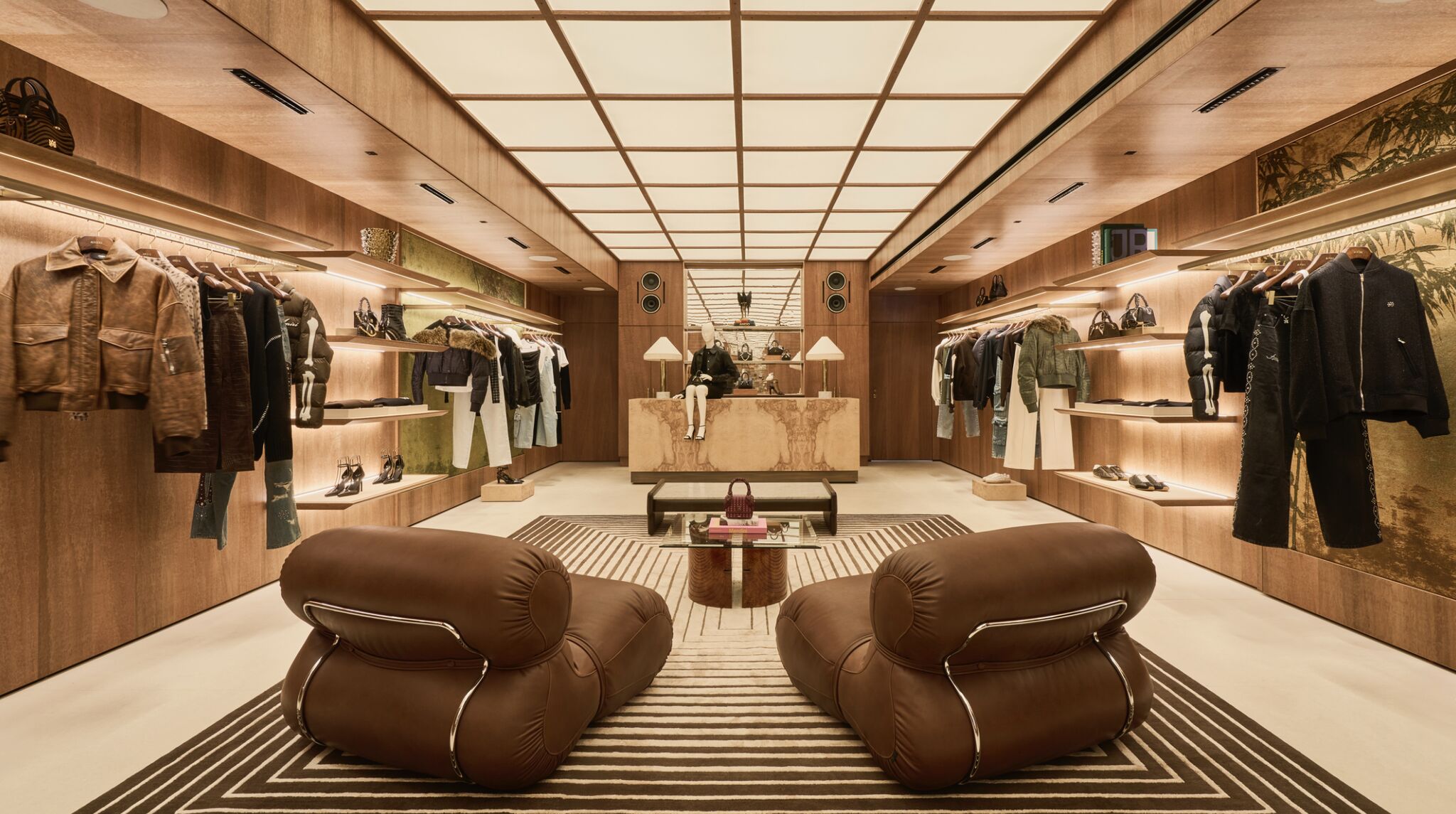
Brands have never been so visible, yet organic traffic—the kind that arose from the prestige of an address, the power of a name, or the simple desirability of a brand—has eroded. Luxury must now learn to create what it has long taken for granted: a reason to visit.
The end of organic traffic: when visibility is no longer enough
Luxury is entering an era of structural tension. In three years, nearly 60 million aspirational customers have left the market (Bain-Altagamma, 2024). Polarization toward VICs is increasing, while spending is shifting toward experiences—travel, gastronomy, culture. This movement is undermining a model historically based on two implicit certainties: that desirability would be enough to generate demand, and that the expansion of the retail network would automatically generate traffic. These certainties have disappeared.
Digital technology now influences 80% of luxury purchases (McKinsey), but 80% of sales continue to be made in stores. The intention arises online. The decision is made in person. And the higher the perceived value and price, the more the store remains the place of final validation. The problem is therefore no longer one of capturing attention. It is one of transforming that attention into actual foot traffic.
Why do some brands still convert their desirability into visits, while others see their stores emptying despite comparable visibility? Because organic traffic no longer exists. Stores no longer attract customers by inertia. They have become strategic, costly assets that must now justify the trip.
The new equation is simple: turn a prospect into a visitor, a visitor into a customer, and a customer into a repeat customer. Each link in the chain requires intent. The strategic question is no longer "how can we be visible?" but "how can we make the visit necessary?"
From notoriety to motivation
For years, drive-to-store was treated as a display mechanism. Multiplying channels was supposed to automatically generate traffic: video campaigns, OOH, retargeting, social amplification. This approach is no longer sufficient. Going to a store is now a conscious decision involving time, energy, and attention.
Behind every visit lies a real motivation: to give, to celebrate, to belong, to discover, to immerse oneself. An effective drive-to-store strategy consists first of identifying this motivation, then organizing the touchpoints capable of converting it into a visit. Paid levers trigger the impulse: video campaigns to create desire, OOH to anchor presence in the city, social ads to target and retarget. Owned levers structure the decision: websites to provide details and location, newsletters to personalize, organic social networks to engage, and storefronts to materialize the promise. Earned levers amplify and legitimize: press coverage, organic sharing, word of mouth, visitor-generated content. But their effectiveness is based on a simple principle: consistency between what the brand promises and what the customer actually experiences. When this continuity exists, intention turns into visits. When it breaks down, attention remains digital and the store does not fill up.
Drive-to-store is no longer a visibility issue. It has become a motivation issue.
From a smooth journey to emotional continuity
Omnichannel retailing has long been thought of as a technical integration issue: removing friction and smoothing transitions. This is necessary but insufficient. What really triggers a visit is not the smoothness of the journey, but the emotional continuity between what the brand makes the customer feel beforehand and what the customer experiences in the store.The data confirms this: cross-channel customers have a lifetime value that is 30 to 44% higher (HBR) than that of single-channel customers. Consistency is therefore not just a matter of aesthetics. It is also a matter of economics.
Each interaction must prepare for the next: spark emotion, reinforce desire, make the visit obvious. When the digital promise finds its physical embodiment and the in-store experience faithfully extends the narrative initiated upstream, omnichannel marketing ceases to be a technical device. It becomes a system for creating value and desire.
This principle of emotional continuity must be part of a temporal architecture. Drive-to-store can no longer be thought of as an isolated campaign. It works according to several complementary activation strategies—some global, others local.
However, these campaigns are still too often poorly structured, even though they are one of the most effective ways to generate qualified traffic and reactivate dormant customers.
Three approaches currently structure these activations
To be effective, drive-to-store can no longer rely on a single mechanism. It now draws on three complementary approaches: a permanent foundation that converts intent into visits, global activations that create peaks of desirability, and local activations that anchor the brand in its environment.
RUN mode forms the basis of this architecture. It does not aim to create a spike in attention, but rather to ensure continuous traffic over time by directing all touchpoints to the store in order to convert digital intent into visits. Its effectiveness is based on a few fundamentals: a visible store locator, a smooth appointment booking process, local SEO, and customer review management. These elements seem obvious, but they often remain fragmented between digital, CRM, and retail, a fragmentation that costs traffic even before the customer approaches the store.
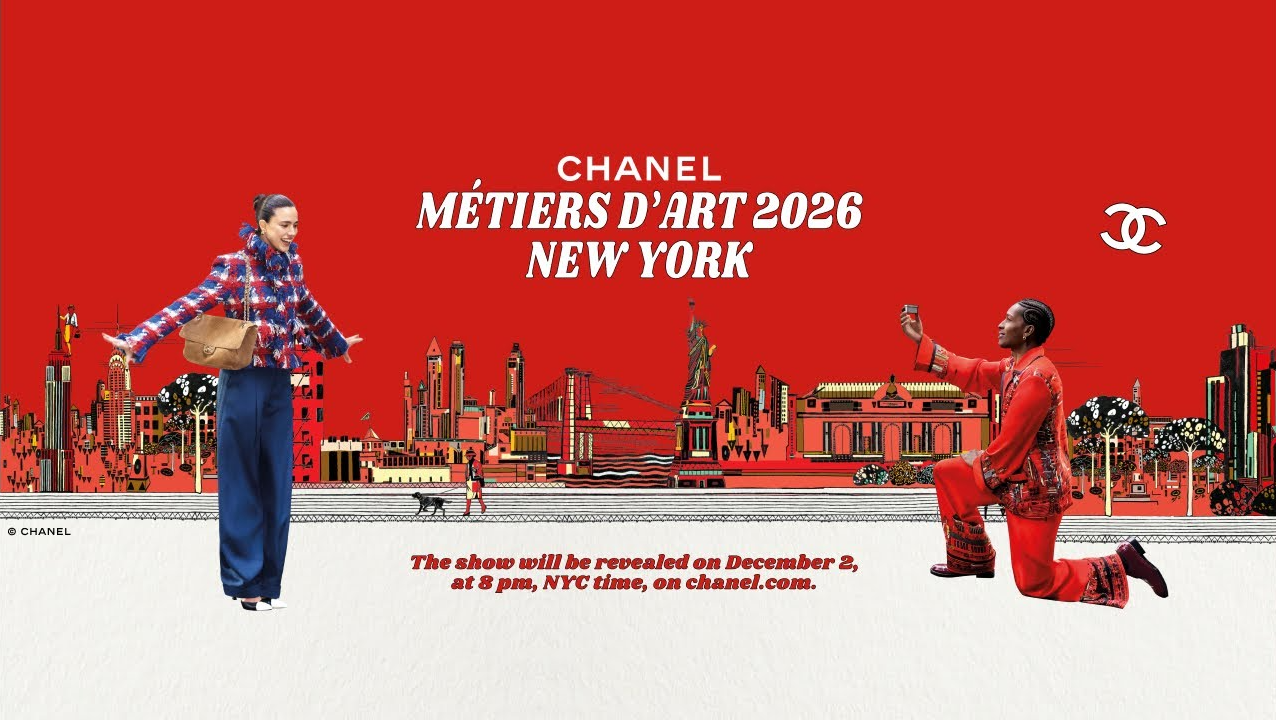
SEASONAL mode corresponds to major global narrative accelerations. It allows brands to synchronize their touchpoints around a moment of concentrated desirability. The A Magical Night in 13 Paix de Cartier campaign illustrates this logic. Designed as a store-led experience, it makes the historic boutique at 13 rue de la Paix both the origin and the culmination of the narrative. The film sets the tone, digital media prepares the visit, OOH territorializes the message, and window displays extend the narrative to the in-store experience where the promise is fulfilled. Each interaction prepares the next. The campaign does more than just amplify desirability: it organizes the conditions for the journey.
Some brands then extend this momentum through local activations, which draw on existing cultural or community highlights in the city. The store then becomes the meeting point between the brand and a community already mobilized around an event. During marathons, for example, Nike offers medal engraving in stores: athletic performance is materialized on the spot, transforming the event into a qualified retail flow. The annual repetition of this initiative gradually turns it into a ritual for the running community.
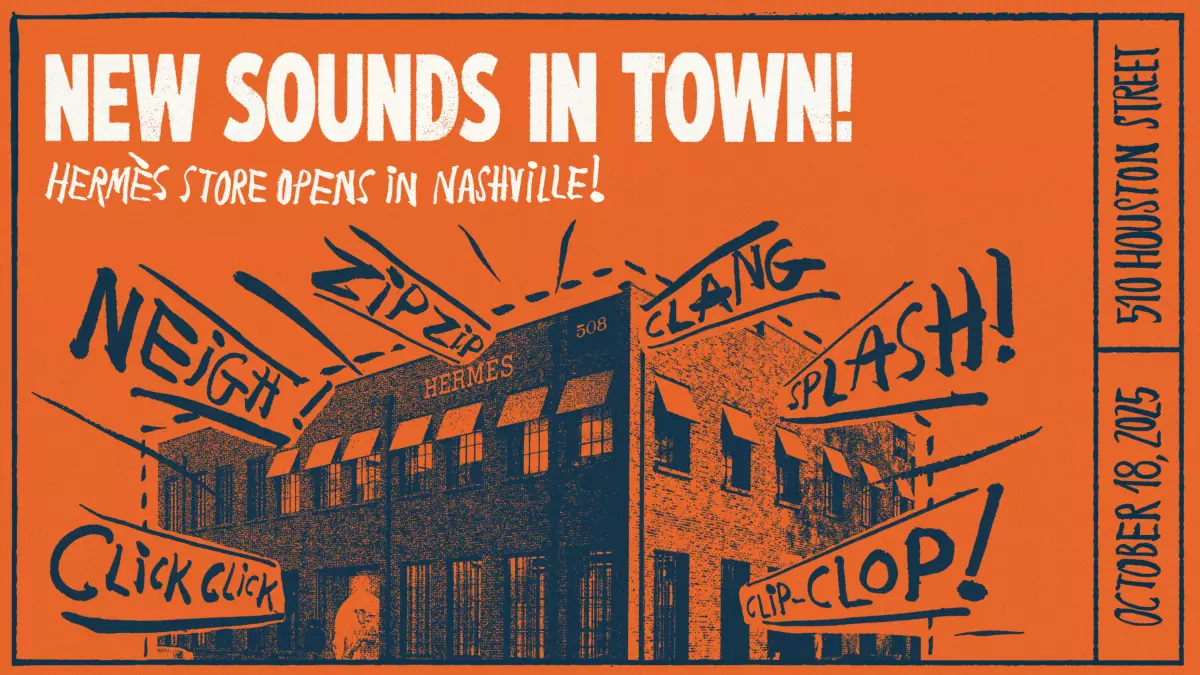
Store openings are another expression of this territorial logic. In Nashville, Hermès has already made its new address part of the local musical imagination even before its inauguration: with a country-inspired audio teaser, visuals reminiscent of concert tickets, and a live concert during the inaugural dinner. The opening does more than just announce a store; it builds local cultural legitimacy.
RUN creates continuity, SEASONAL generates intensity, and local activations anchor the store in its territory. Together, these approaches transform drive-to-store: no longer a one-off campaign, but a strategic system for generating traffic.
Today's top-performing companies no longer treat drive-to-store as a marketing campaign. They orchestrate it as a strategic system, combining global highlights, local activations, and regional anchoring. In a market where attention is abundant but movement is rare, traffic is no longer a given. It is a strategic construct.
Opinion column for Luxus+
Héroïne is the art of designing experiences that leave a lasting impression. Scenography, space design and sensitive storytelling at the service of your world and the people who inhabit it.




.webp)
.svg)

.svg)